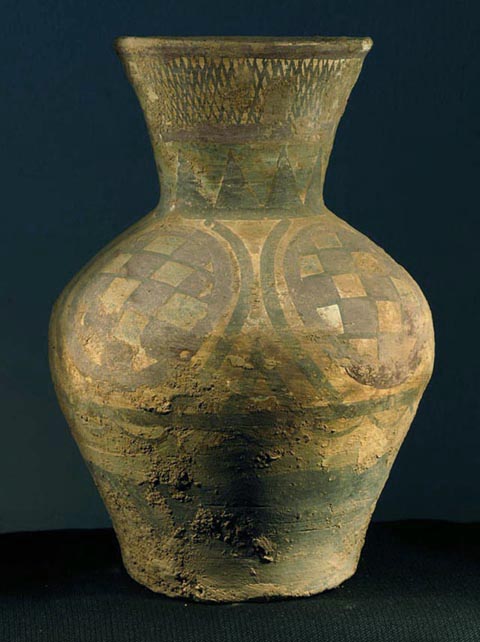
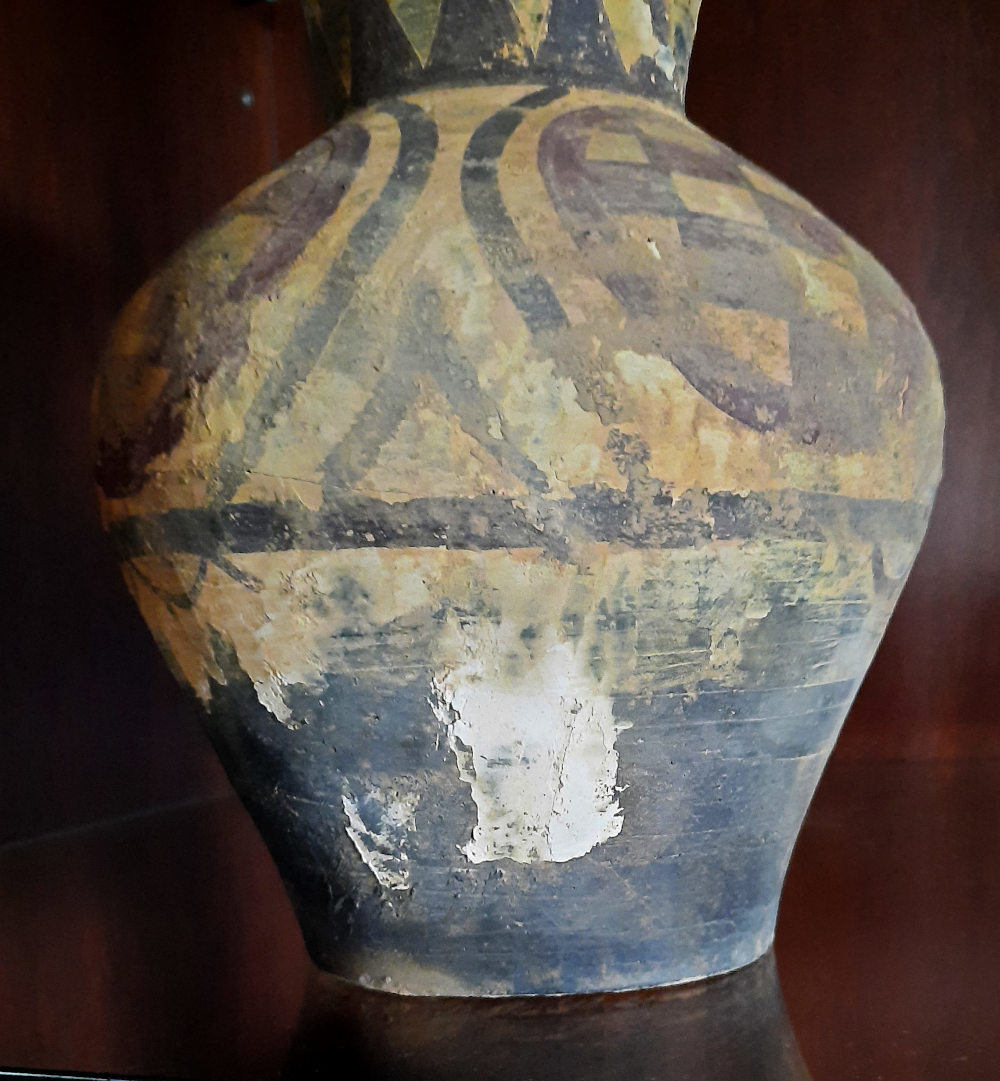
Neolithic Dawenkou black pottery jar with 3 color geometric painting, China c. 3000–2500 BC
Hand-built earthenware, black clay body 25 cm high
This substantial pottery jar was made from black pottery that was painted after firing as opposed to traditional and more stable pre-firing paint. This known process was necessary on black pottery because paints are easily degraded during black pottery firing processes. After firing, the upper two-thirds of the vessel were covered with a continuous white background color applied by hand. The boundary between the top and bottom unpainted black pottery is ragged. A curious spatula-like test patch of the white material remains below the white black boundary.
After applying the white layer, geometric motifs were painted in red and black mineral pigments over the white background to produce a three color design on the black pottery. The design fully covers the top two thirds so that the white clay background functions as a third color design element. Although the white paint served as a base against the black pottery, the artistic intent was to make white an equal active participant in a three color Red, Black, White scheme. This shifts the white layer’s role from a simple primer background.
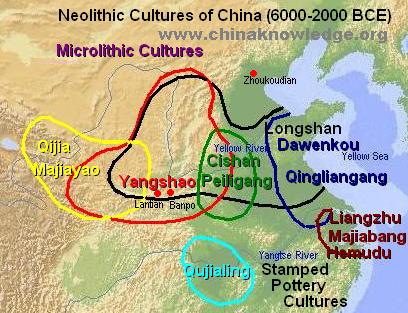
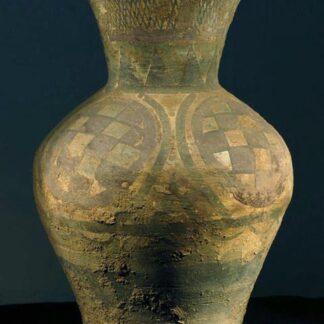
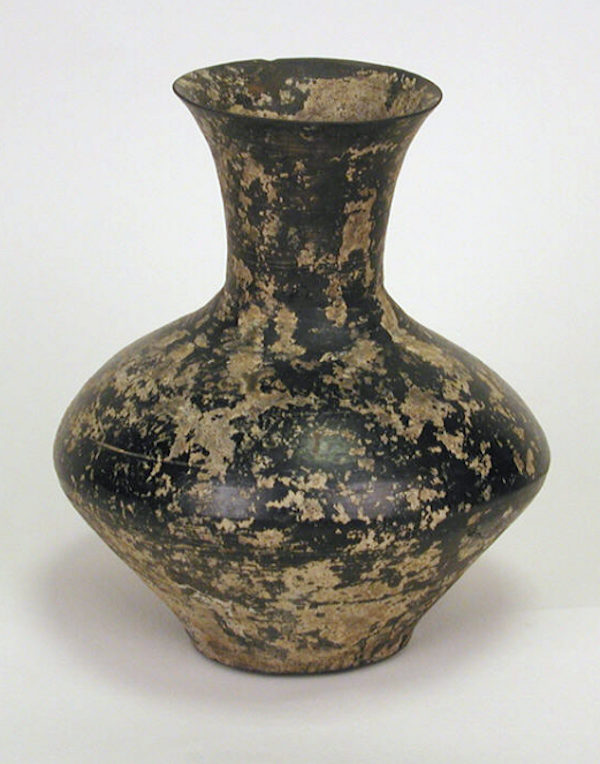
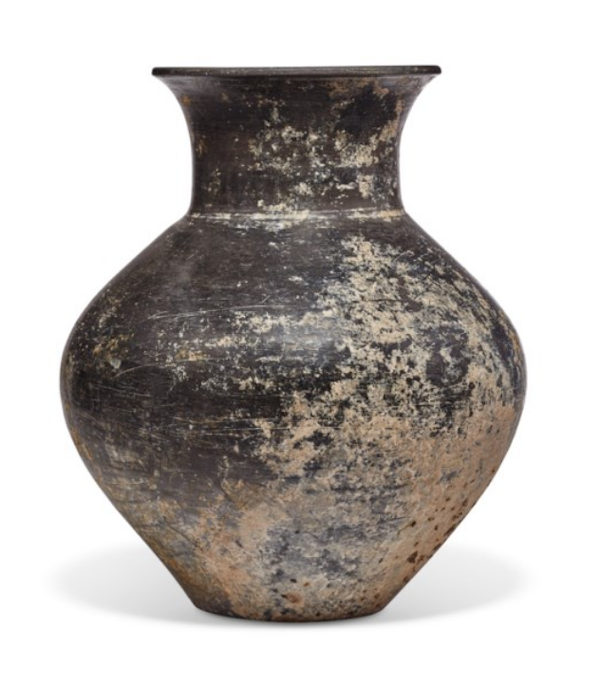
The jar’s basic form—upright body with a distinct neck—aligns with the eastern black-pottery traditions of the Dawenkou and early Longshan cultures in the lower Yellow River region. Comparable plain black pottery jars of similar shape and normal wall thickness (not thin eggshell) are documented in museum and auction contexts. Examples include the Metropolitan Museum of Art (image 3 above) and a jar sold at Christie’s China in 2022 (image 4 above).
In contrast to its Dawenkou form, the painting’s geometric concept with triangular, lattice-like elements and circular medallions, is clearly inspired by well known Yangshao painted-pottery designs from upper and middle Yellow River regions. Then again, its bold blockish artistic expression doesn’t follow classic Yangshao’s fluid curving style thus rendering Dawenkou origin with external influence seems reasonable.
Because dark pigments have little contrast on a black surface, the white painted background was needed to emphasize the red and black elements. The result is a true three-color scheme—black body, painted with a white background, then red and black on the white to produce a 3-color painted design on a black pottery vessel. While multi-color painting on orange or buff clay is known in both Yangshao and Dawenkou traditions, and plain black jars of this general form are documented from Dawenkou, the specific combination of a black body and 3 color over painting is not in the published corpus.
The vessel was acquired in Singapore from a private collector and researcher who obtained material directly from Chinese tomb explorations. The unusual piece is both an uncommon technical and cultural hybrid: an eastern black-pottery form adapted to carry western geometric design ideas by means of a white clay background that both enables and becomes part of the decoration.
Jiaojia Site References:
School of archaeology SDU Jiaojia study Chinese study
School of archaeology SDU Jiaojia study – English abstract
General References:
Dawenkuo National Archaeological Site Park
World History Longshan Culture
Ceramic Studies Prehistoric Pottery in China
Early neolithic Chinese pottery
Neolithic Cultures of China 6000 – 2000 BC