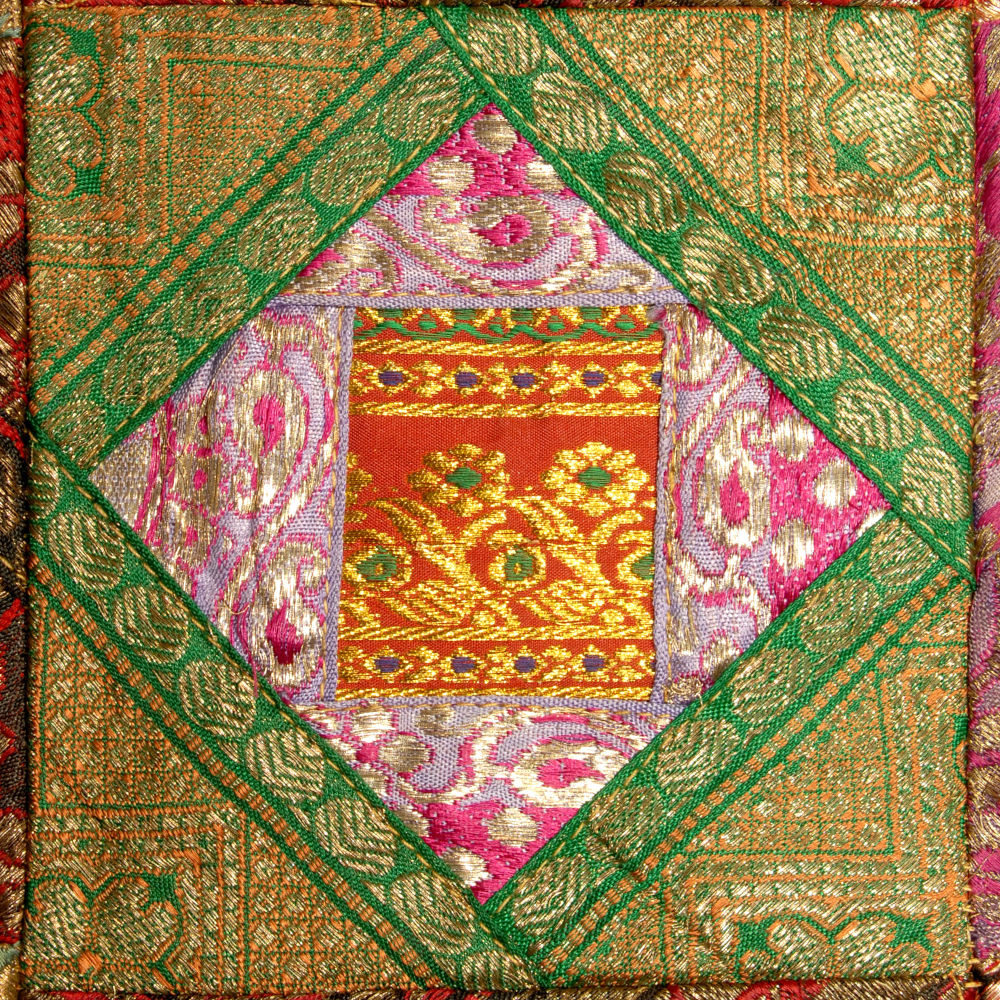
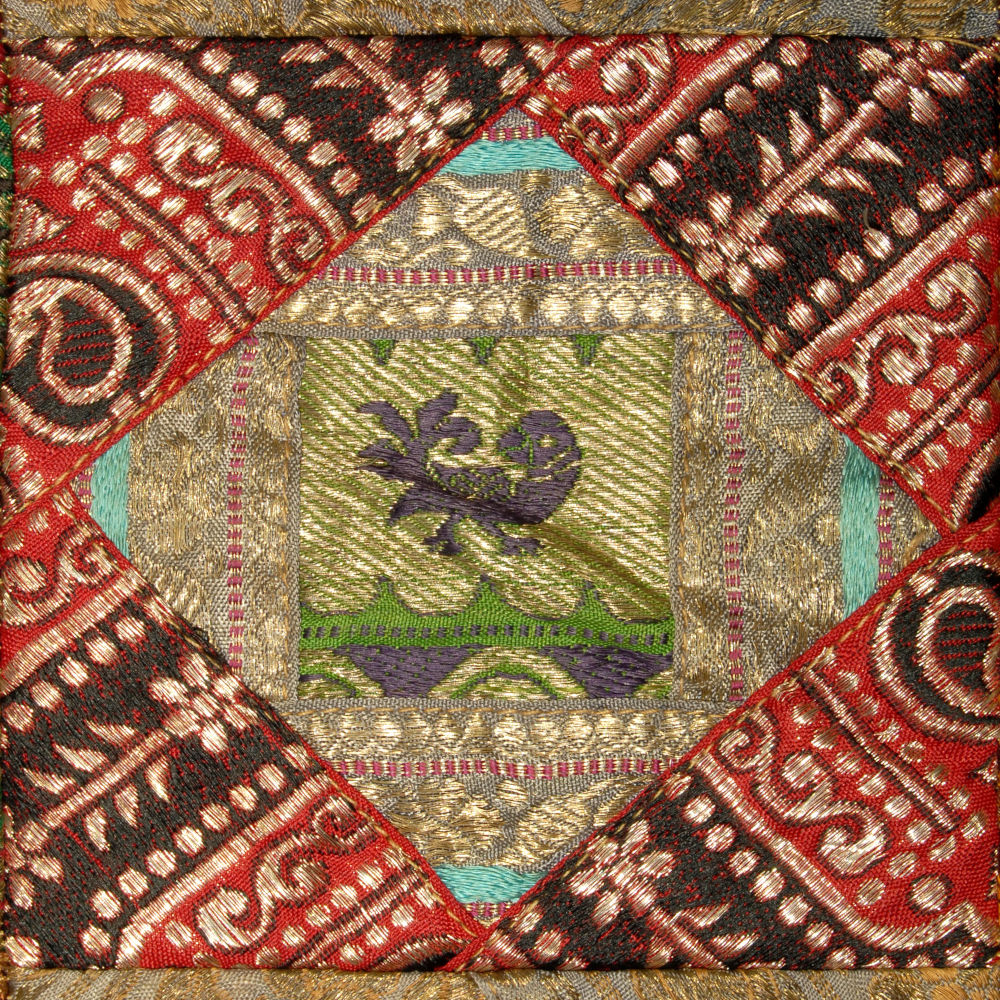
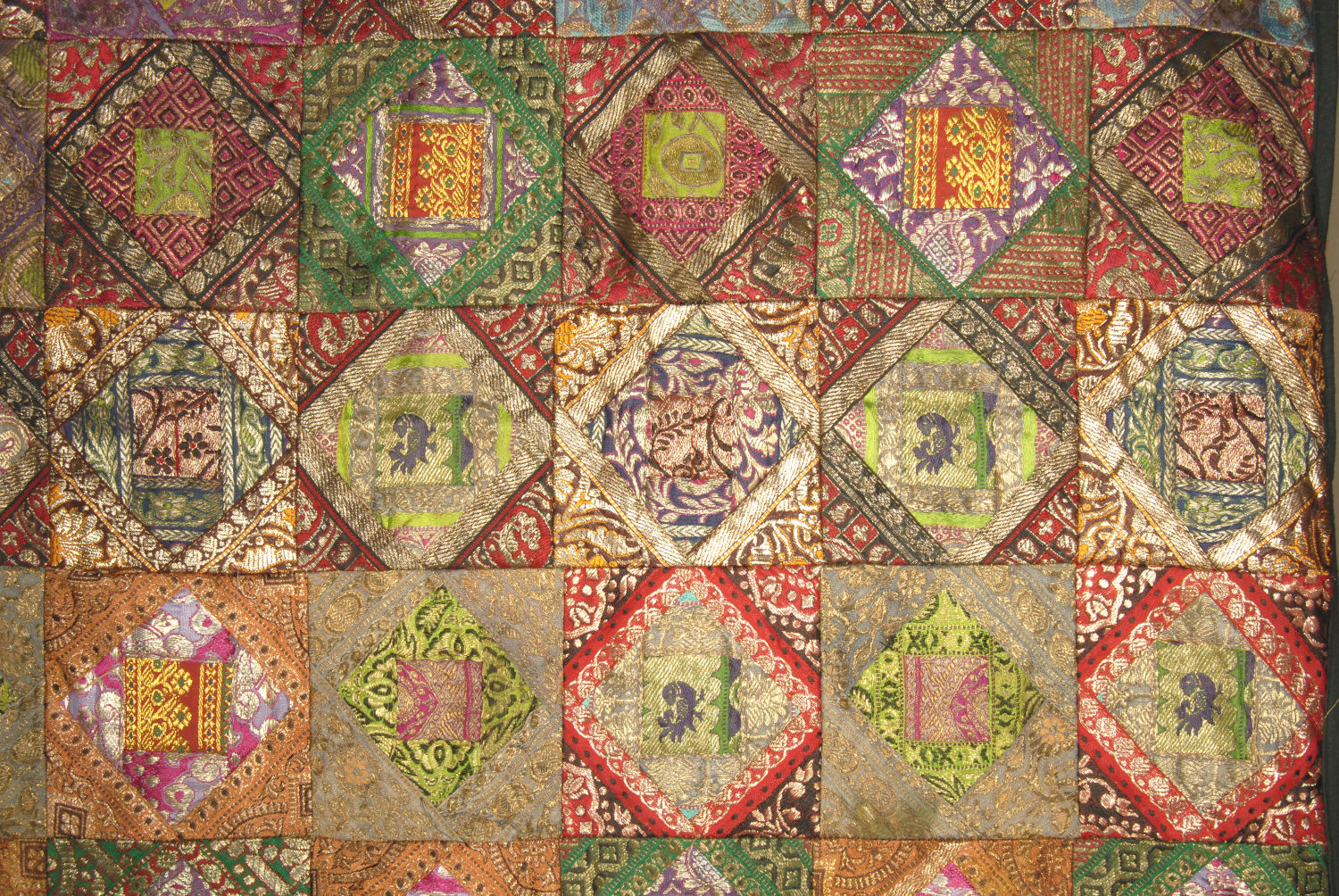
Antique Temple grade pieced gold Zari hanging
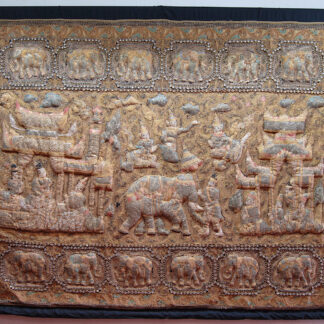
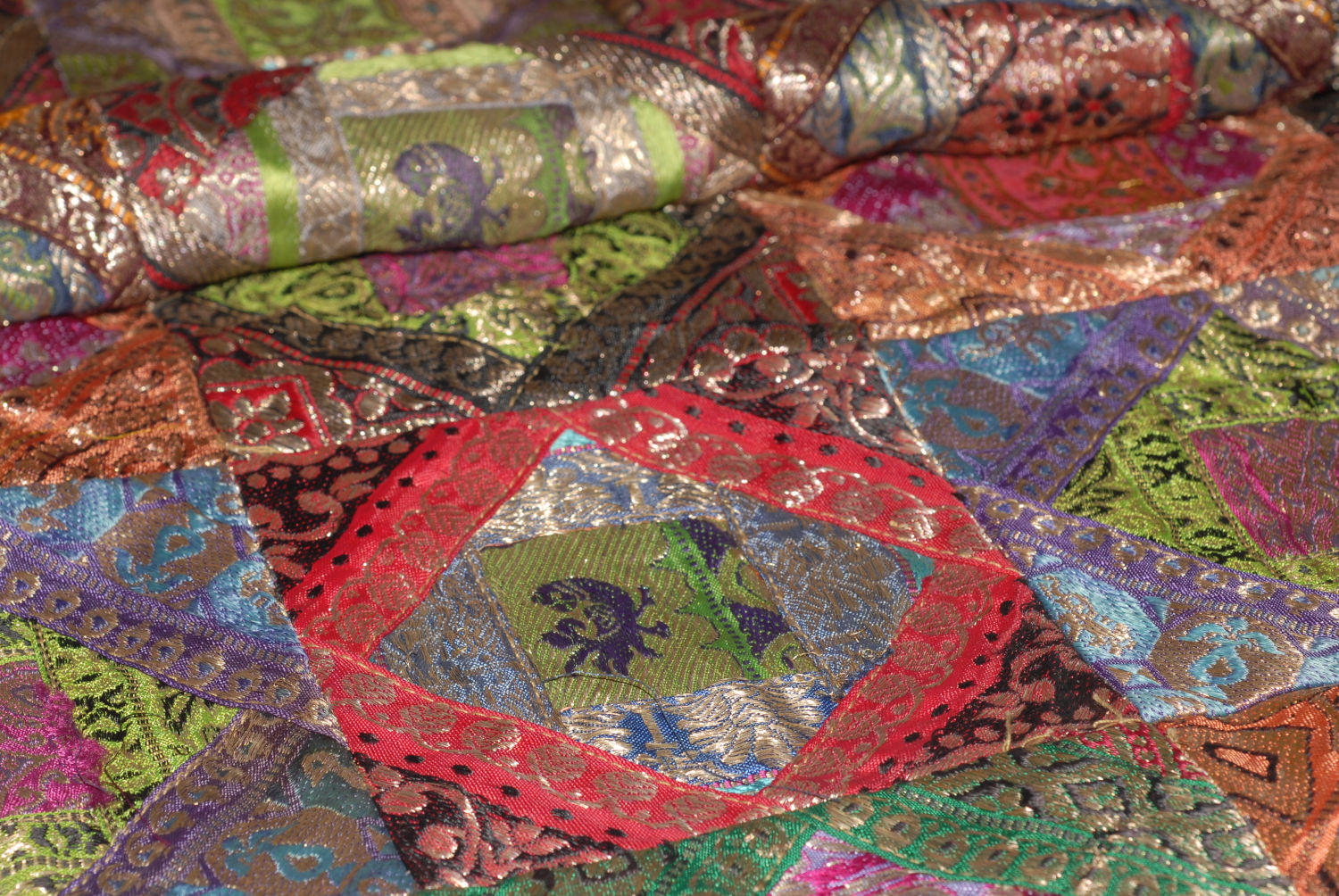
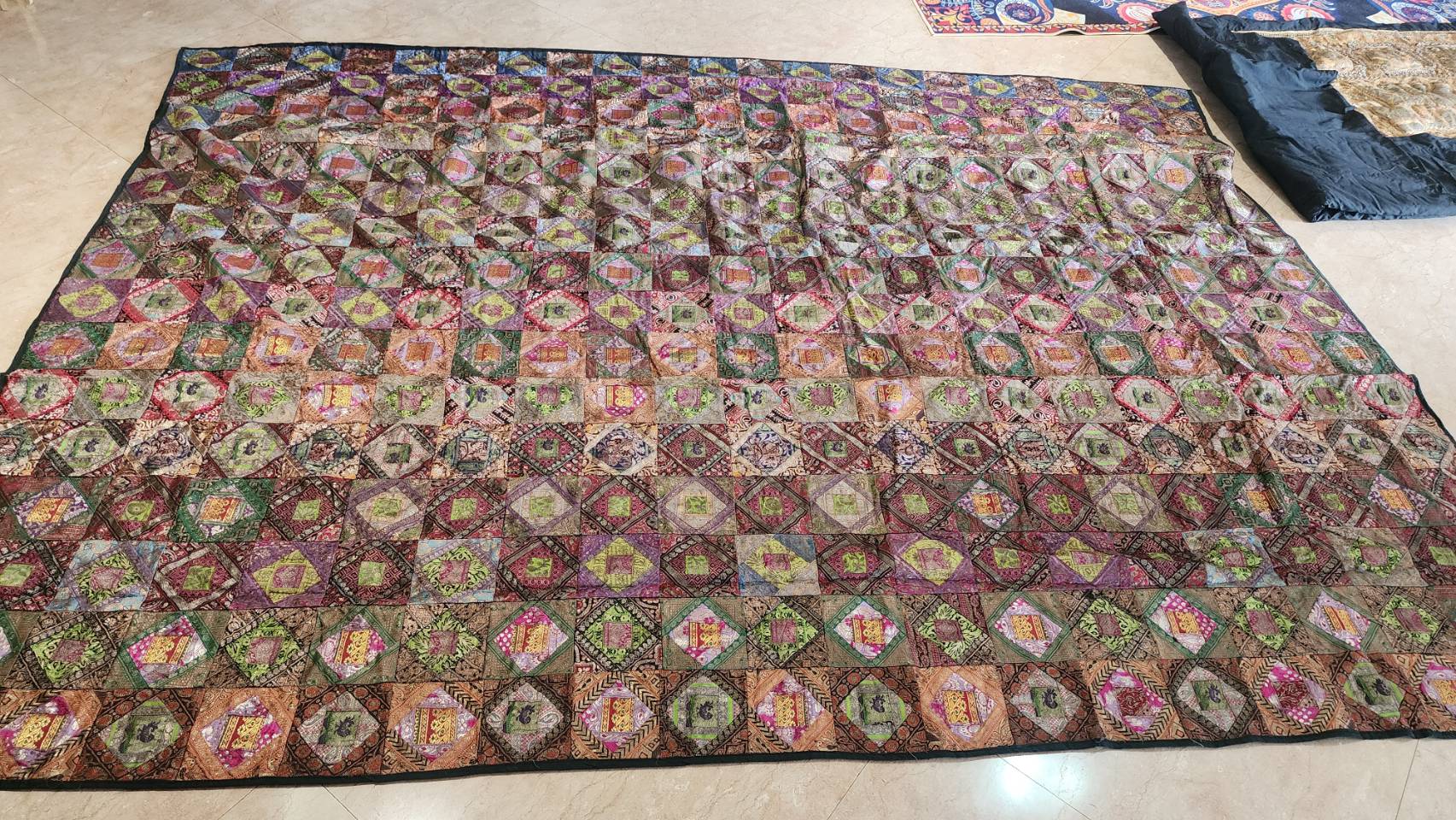
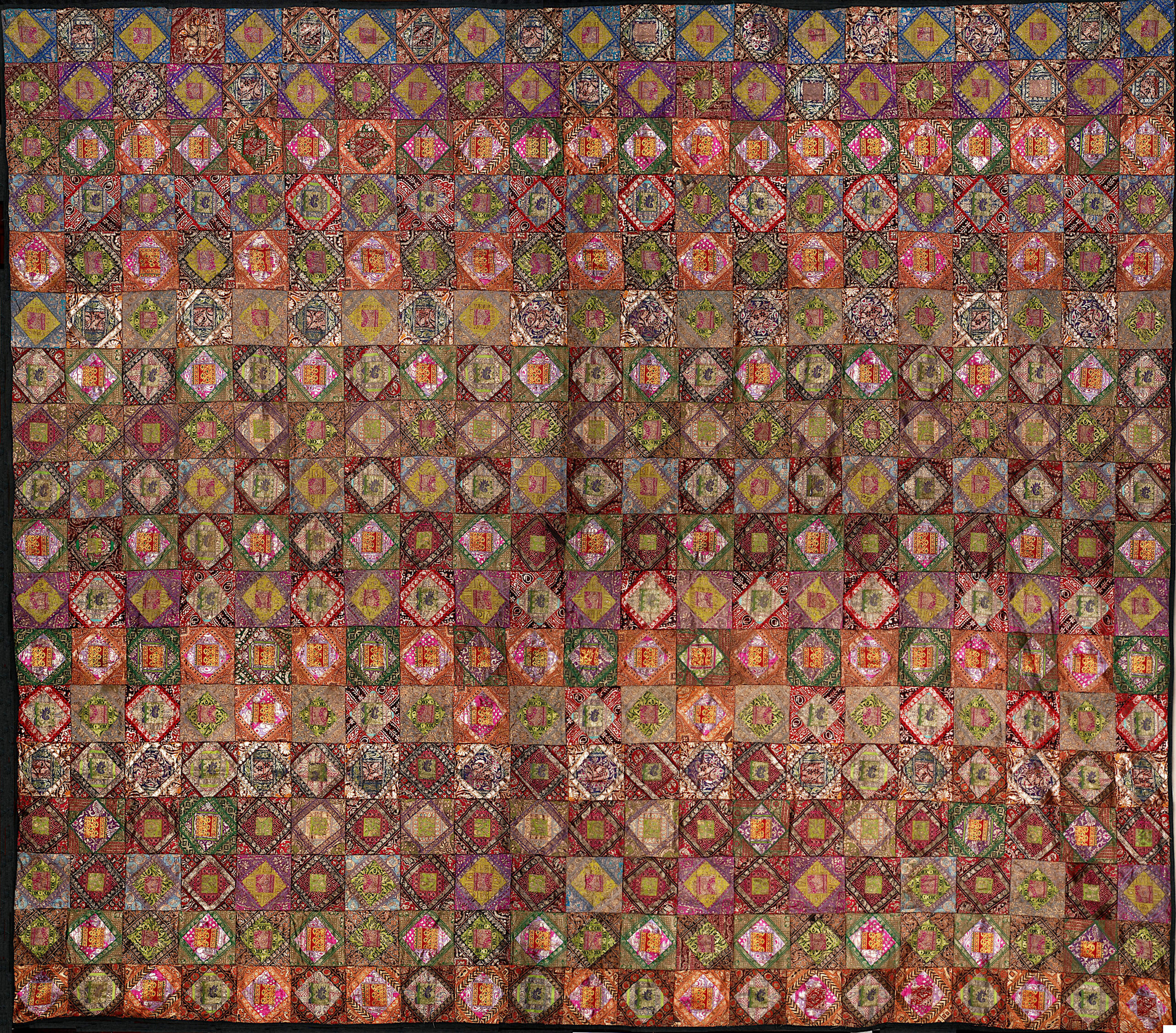
This massive temple grade West Indian textile panel (Kanat or Pichwai) is an extraordinary example of historic temple type craft, custom-tailored to serve as an indoor architectural lining or backdrop. It measures a grand 230 × 265 cm and weighs a massive 5.5 kg, mostly from its opulent gold and silver Zari thread. The ornate masterpiece is backed with a lightweight fabric designed for frame-mounting. Handcrafted by master guild tailors (Darzis), the entire surface is organized as a mathematically precise regular array of 378 individual 12 × 12 cm squares arranged in a 18 × 21 matrix. Elevating its courtly status, the central motifs within the squares are strictly restricted to a royal iconographic cycle alternating between majestic peacocks, intricate floral designs, and lush plant life, all sourced from premium, discarded Kinkhab (cloth of gold) and metallic zari ceremonial garments.
Origin
The piece was acquired in Kathmandu, Nepal in the late 1980s and was not new at that time. However, the piece has two dates of origin, first its date of assembly construction and second the date of origin for the large number of individual brocade fabrics used in its assembly. These large hangings traditionally were made from expensive, high class or royal fabrics like saris with opulent amounts of gold and silver threads. These saris were repurposed after a lifetime of use and their origins can go back another 50+ years making the piece a true antique.
Chaukhat-Kona ‘Economy Block’ Construction
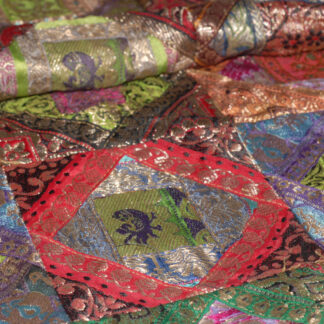
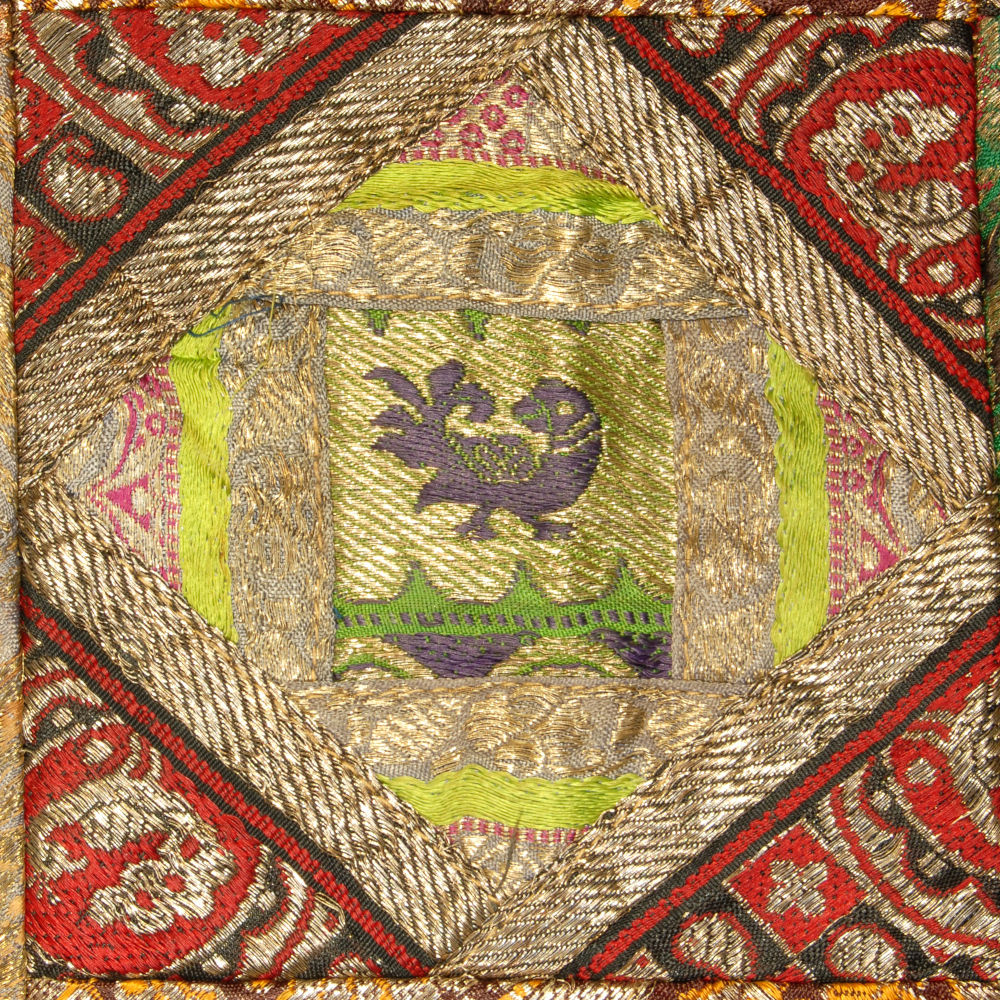
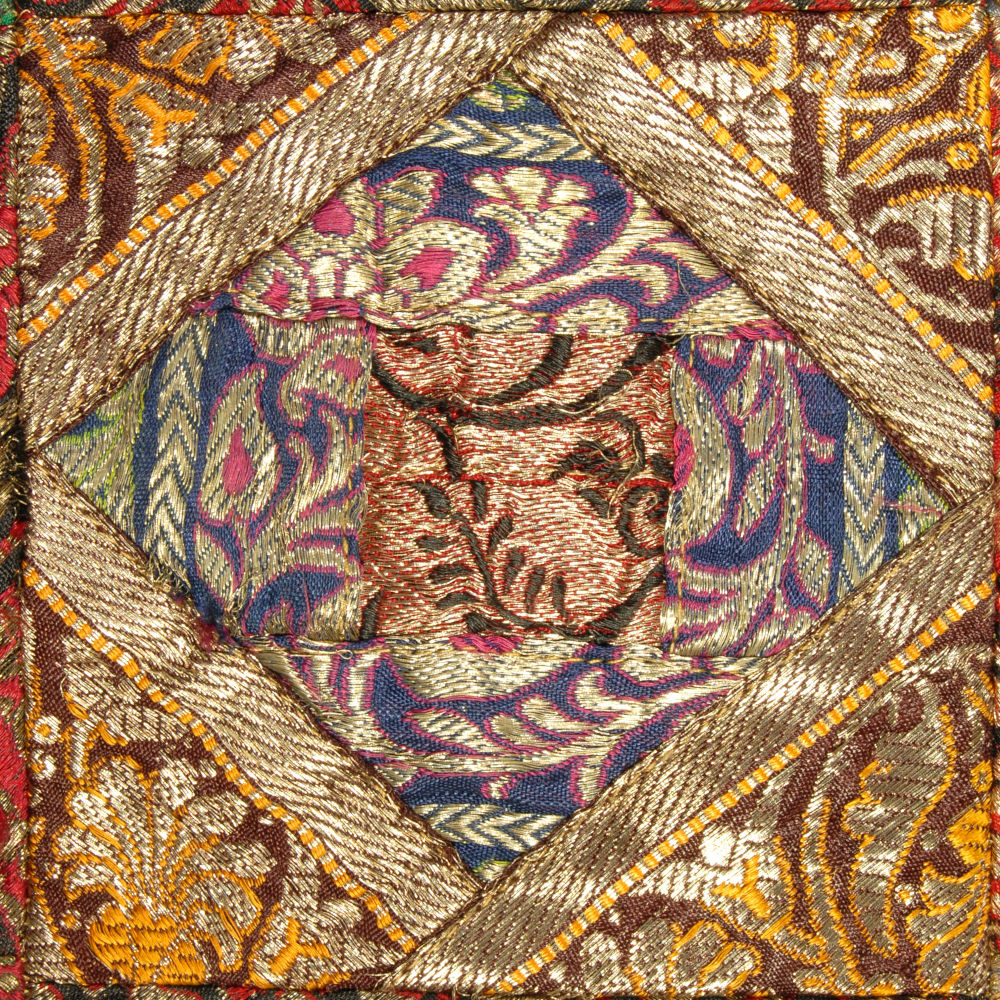
To build a cohesive, repeating narrative across a large expanse, artisans employed the traditional Chaukhat-Kona square-in-a-diamond-in-a-square design, also known as ‘Economy Block’ . Each square’s 9-piece geometric layout features one of three the central themes, peacock, floral design, or natural plants. The middle diamond is bordered by four mitered strips of metallic ribbon cut as triangles and rotated 45° that become the corners of the outer square.
The term ‘economy block’ refers to frugal management of surface area to maximize the density of gold and silver Zari, thus it refers to concentrated wealth not economy of value. Because antique Zari thread was made from genuine spiral wrapped silver and gold-plated wire, they were highly valuable but prone to unraveling when cut. Thus the ‘economy block’ design allows measured fragments to be cut along rigid lines to concentrate precious metal and ensure Zari stability, while creating a dazzling optical light-shifting shimmer. When joined into the full 378-tile array, these mitered blocks form an interconnected load-bearing fabric truss. This structural engineering distributes the canopy’s 5.5 kg weight evenly and provides n even view of its shimmering gold and silver threads.
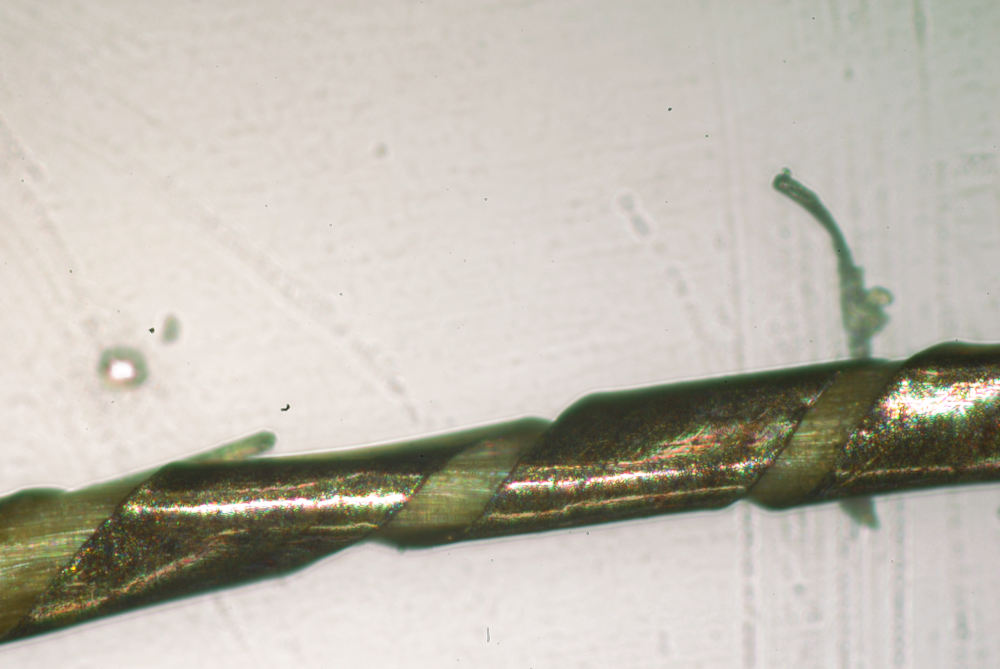
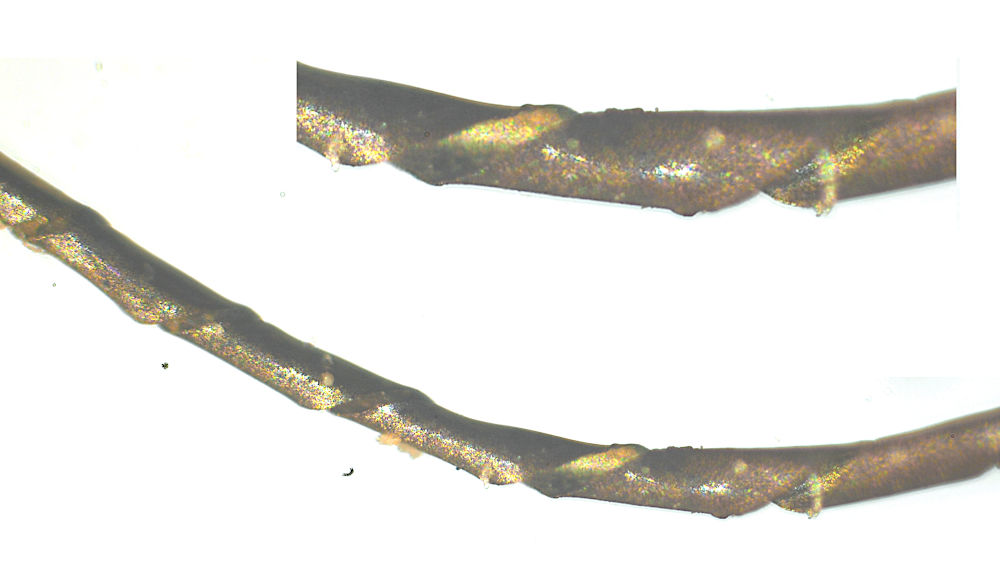
Kalabattun: antique heavy spiral wrapped gold and silver Zari thread
The micrographs below reveals authentic antique gold gilded-silver Kalabattun type Zari thread, constructed by spiral wrapping a flattened gold-plated silver ribbon (Badla) around a central silk core, producing a finished thread little more than 100 microns in width, the size of a human hair. The high density of metallic thread accounts for the textile’s extraordinary 5.5 kg weight and its shimmer. The full fabric contains an estimated 3 to 4 million stitches or segments of metallic Zari thread, which contributes roughly 3 to 3.5 kg of the piece’s 5.5 kg mass.