Rare Vietnamese Đông Sơn bronze long sword
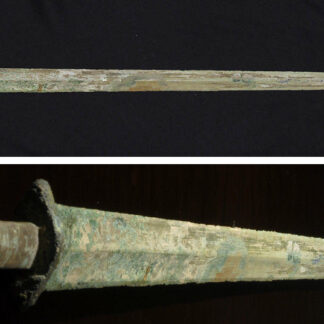
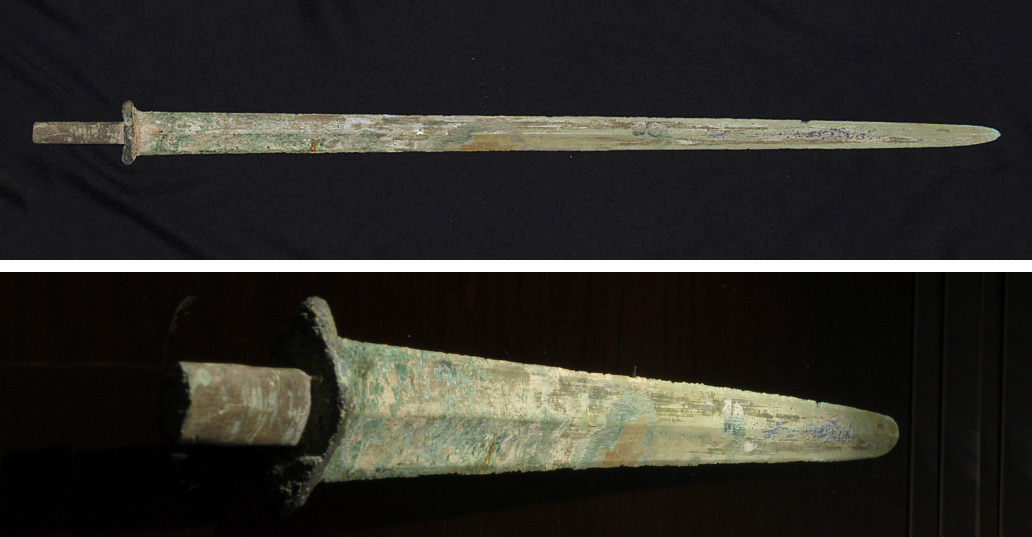
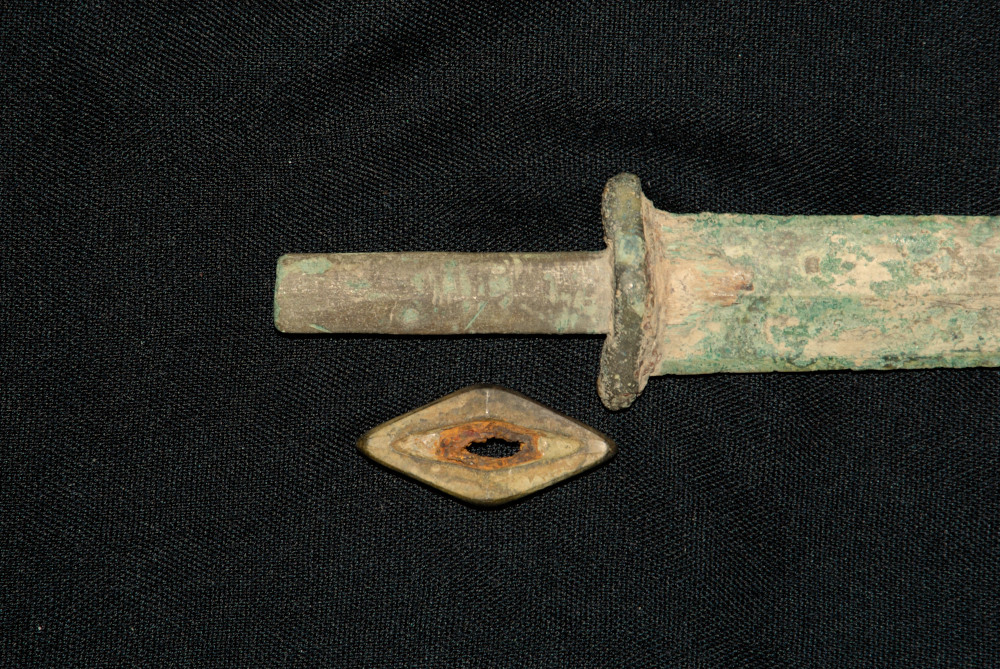
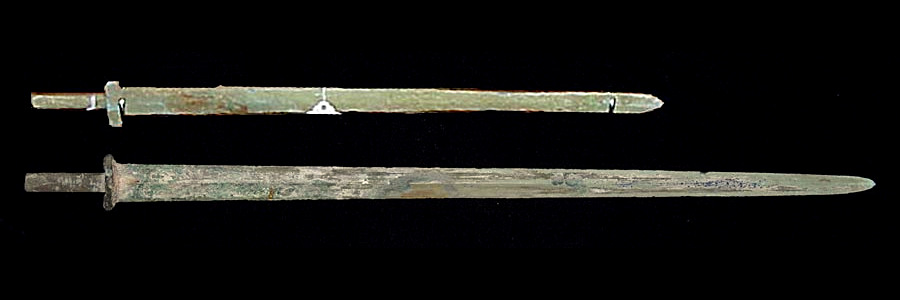
This excellent condition 67 cm bronze long sword (kiếm dài) is fully consistent with other early northern Vietnam Đông Sơn bronze swords and artifacts. Its narrow blade is typical of mid to late Đông Sơn period long swords with both bronze and iron blades. Early Đông Sơn period weapons were dominated by short daggers and spears. Longer swords appeared later along with long iron blade swords.
Vietnamese swords are consistently narrower than their Chinese Warring States and Han Dynasty counterparts. The long slender blade and light weight makes the weapon easily maneuverable.
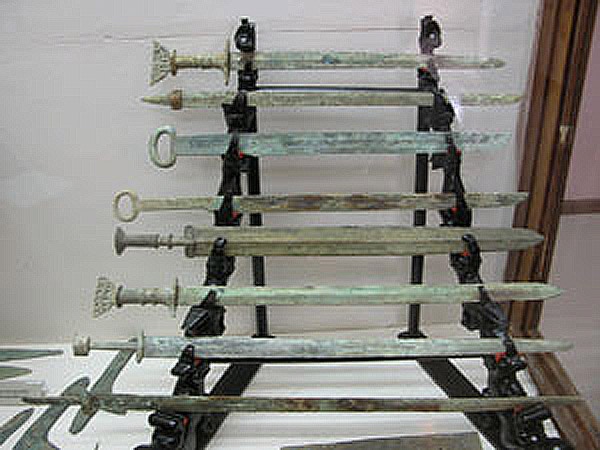
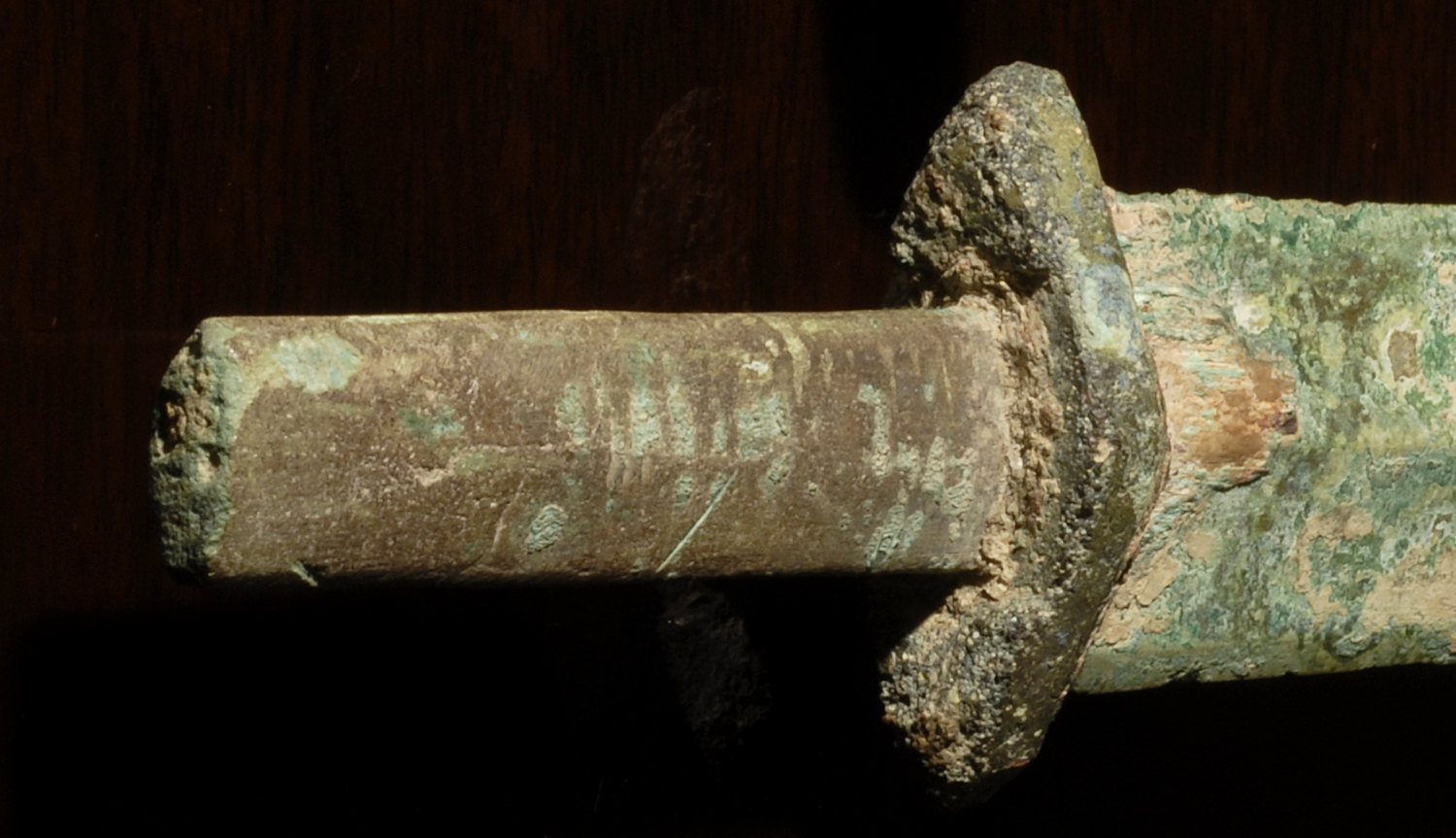
This sword has a straight hilt with a roughly rectangular cross section that terminates with no distinct pommel, ring, or disk. While most long sword hilts display elaborate artistic motifs, circular terminals, animal figures, bells, or anthropomorphic elements. This piece’s plain straight hilt is a know but uncommon variant seen in both bronze and iron swords.
2. Surface and condition
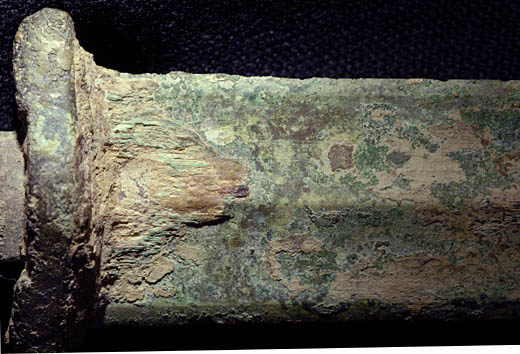
The sword’s surface has several informative features. The base of the blade has mineralized wood grain and impressions from a long decayed wooden scabbard (vỏ bao kiếm) in which the sword was buried. The blade’s surface is covered with characteristic drab green patina common to Vietnamese bronze of the period.
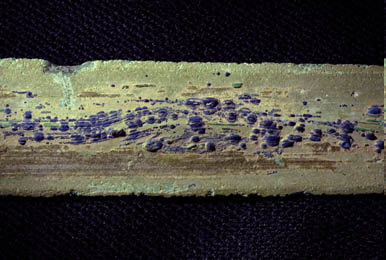
The upper blade has additional distinctive deep blue crystalline azurite (copper carbonate) deposits running along the blade’s center ridge. More remarkably, the image zoom below shows the azurite patina growing along curved wood grain contours of the now disintegrated scabbard. Chemically, the wooden sheath filtered more acidic pure ground water required to form azurite. The sword is a chemical classroom.
Moreover, the hilt shows ghostly impressions from lace or rope ties that once wrapped around the handle. These were likely used to mount a more functional or decorative handle, possibly made of wood or bone. More often, long swords had cast in place bronze handles. A special wood or bone handle and the sword’s length might indicate a ceremonial piece.
3. Authenticity
The sword’s scabbard residue, handle rope marks, blue azurite patina and more so its growth along long decayed wood grains provide indisputable evidence of its authenticity. This is interesting because the sword was initially sold as a possible forgery. The seller, likely unfamiliar with its rare style, assumed it may be a fantasy piece. Most common examples of Đông Sơn bronze weapons in the market are short daggers. A rare style of an already rare long sword could easily raise suspicion.
4. Period and relationship to iron swords
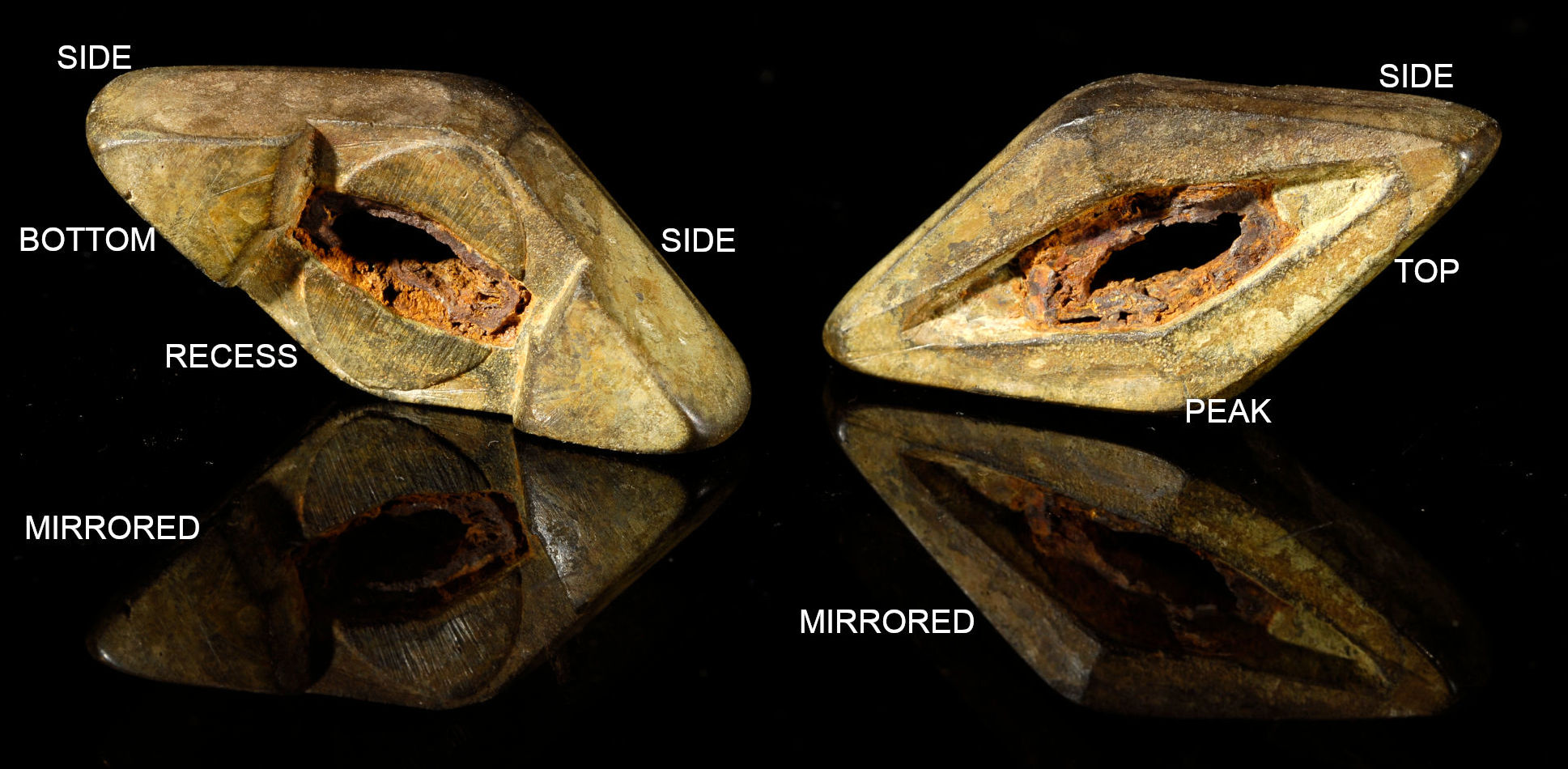
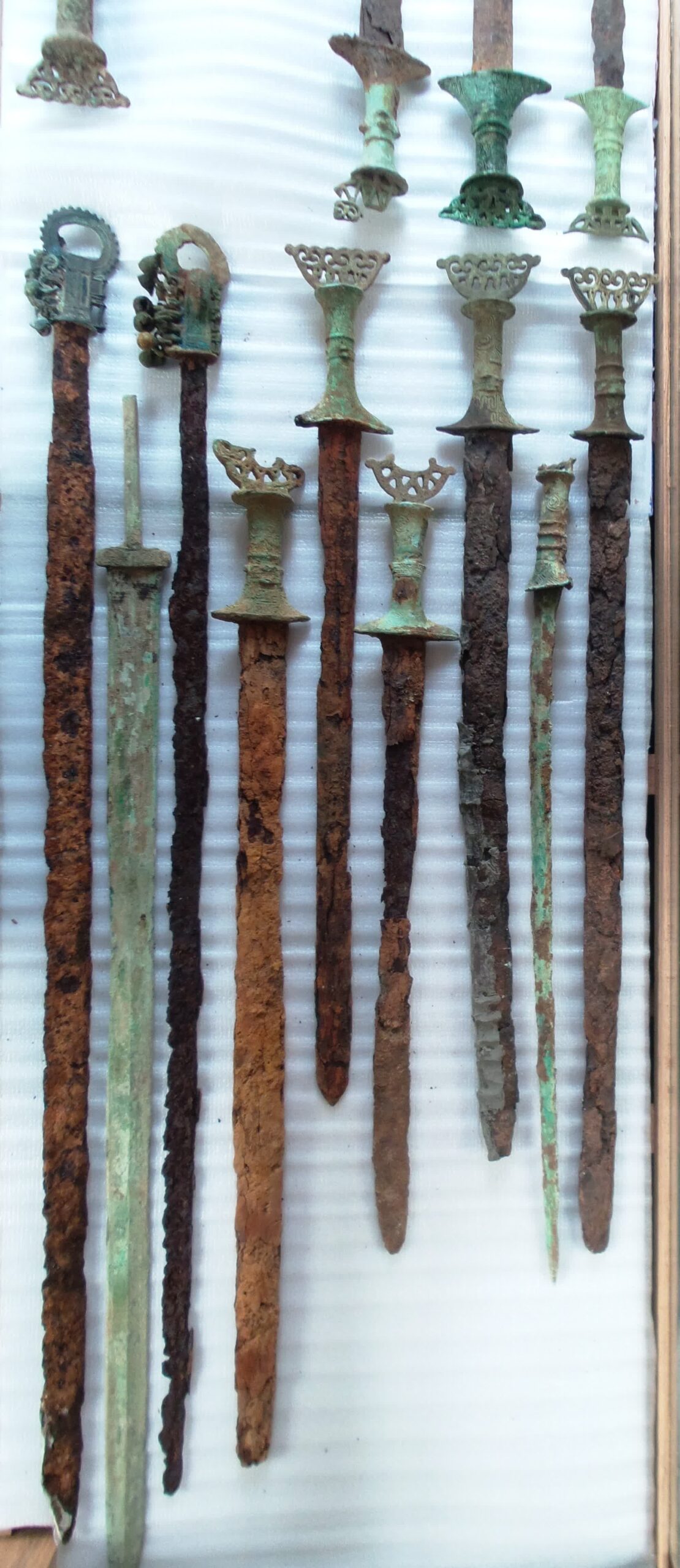
The sword’s age and origin can be understood by comparison to similar Đông Sơn composite iron blade swords that had identical bronze cross guards. These date to the early iron age in the mid to late Đông Sơn period. Most iron swords have been found in the mountainous regions of Thanh Hóa and Nghệ An provinces, notably the Lang Vac archaeological sites. Few iron swords survive the test of time as the iron corrodes leaving behind only bronze components
Images 5 and 6 above compare the shape and design of an iron sword cross guard with the cross guard of this bronze sword. The iron sword’s blade or tang has completely rusted away leaving only signs of residual iron rust inside the guard. The few iron composite swords that did survive are similar in length to long bronze pieces.
4. References
asian.allanbarker.com
Vietnam National Museum of History Hanoi
Phạm Huy Thông Antiques Museum